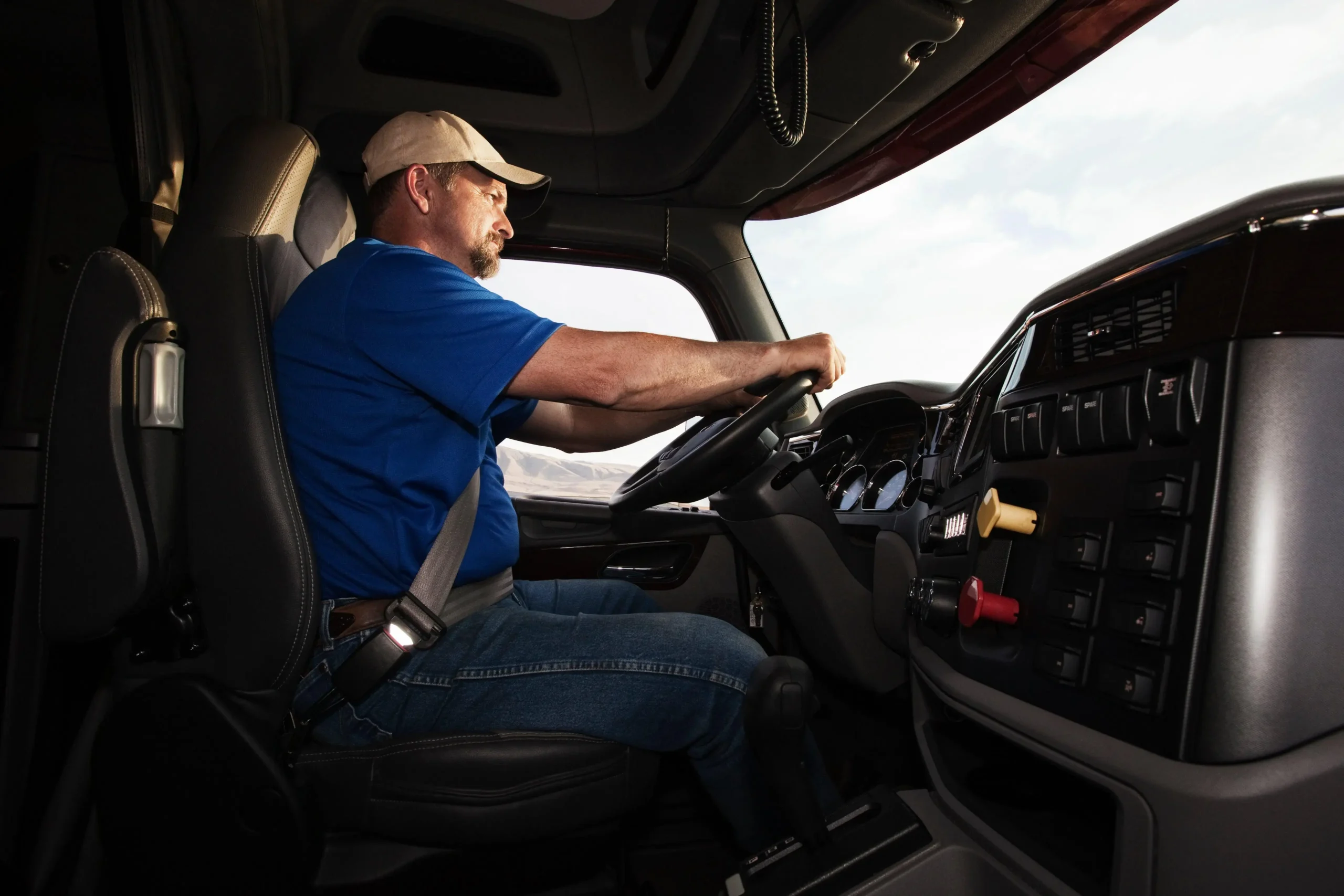
A Michigan OWI for CDL holders can create consequences beyond a standard driver’s license suspension. Commercial drivers are subject to separate rules under Michigan law and Federal Motor Carrier Safety Administration regulations. The outcome depends on the vehicle involved, prior qualifying offenses, how the chemical test was handled, and which specific statute applies. A CDL disqualification can affect employment, endorsements, and future eligibility to drive commercially. An attorney cannot guarantee that a CDL survives an OWI, but early legal review can help a driver understand what is actually at stake.
_________________________________________________________________________
Michigan OWI for CDL holders can mean losing commercial driving privileges, not just facing a court date. A CDL disqualification runs on federal rules separate from the criminal case, on its own timeline, and it can start before the case is resolved.
A CDL holder also answers to a lower chemical test threshold, employer notification rules, and hazmat endorsement requirements that a private driver never deals with. Here is what actually happens to a CDL after a Michigan OWI arrest, and what to do next.
Key Takeaways
- CDL consequences can extend well beyond a standard license suspension.
- A personal vehicle OWI can still create CDL disqualification exposure.
- Commercial vehicle cases carry additional federal consequences.
- Prior qualifying offenses can turn a one-year disqualification into a lifetime one.
- Hazmat endorsements involve separate eligibility rules on top of CDL disqualification.
- Employer notification depends on federal rules, company policy, and timing.
- Early legal review helps you understand actual options before decisions are locked in.
Can a Michigan OWI Put Your CDL at Risk?
Yes. Commercial drivers are governed by two overlapping systems: Michigan’s implementing statute, MCL 257.319b, and the federal disqualification framework at 49 CFR 383.51. Michigan enforces its own program at or above federal minimums, so both systems apply to a CDL holder’s case.
Four factors decide the outcome:
- Vehicle type. Commercial vehicle (CMV) or personal car changes which rules and evidence apply.
- Prior offenses. A second qualifying offense can mean a lifetime disqualification, even if it’s a different type of offense than the first.
- Chemical test circumstances. Refusal, BAC result, and how the test was administered each affect the outcome independently.
- The specific statute charged. OWI, operating while impaired, and refusal carry different consequences on a commercial record.
Definition: CDL disqualification is a period during which a driver is prohibited from operating a commercial motor vehicle because of a qualifying offense or violation.
Does an OWI in Your Personal Vehicle Affect Your CDL?
Yes. Federal rules apply the major offense disqualification to a DUI conviction whether it happened in a CMV or a personal vehicle. A CDL holder pulled over off duty, in their own car, gets no automatic pass.
Scenario: A CDL holder is arrested for OWI while driving their own car on a weekend. The conviction can still count as a major offense for CDL purposes, separate from what happens to their regular license. The exact result depends on the charge, the BAC level, and any prior qualifying convictions.
This is where most CDL holders get caught off guard. Keeping the incident out of a commercial truck does not keep it out of a commercial record.
What Happens if the OWI Involved a Commercial Vehicle?
Operating a CMV raises the stakes further. The BAC standard for a CMV is 0.04, half the 0.08 standard for a personal vehicle. A result at or above 0.04, a refusal, or a conviction for operating a CMV under the influence can each trigger a major offense disqualification on their own.
| Situation | What May Be Affected |
| OWI in personal vehicle | Driver’s license and potentially CDL status |
| OWI in commercial vehicle | CDL and commercial driving privileges |
| Repeat qualifying offense | Potentially longer or lifetime disqualification |
| Chemical test refusal | Possible separate consequences under implied consent |
How Long Can a CDL Disqualification Last?
It depends on the offense, not a fixed number. Under 49 CFR 383.51, a first major offense, including a DUI conviction, generally means a one-year disqualification. That extends to three years if the driver was hauling placarded hazardous materials at the time.
A second major offense, even a different type than the first, generally means a lifetime disqualification. A discretionary reinstatement process exists after a minimum ten-year period for some lifetime disqualifications, but it is not automatic. A felony offense involving manufacturing or distributing controlled substances with a CMV carries a lifetime disqualification with no reinstatement option.
Quick reference:
- CMV or personal vehicle at the time of the offense
- Hazardous materials being hauled at the time
- First or second qualifying offense
- Refusal of a required chemical test
- Alcohol or controlled substance involvement
What Happens to a Hazmat Endorsement After an OWI?
Not every OWI touches a hazmat endorsement the same way. A first major offense committed while transporting placarded hazardous materials in a CMV carries a three-year disqualification instead of one year; a specific hazardous materials disqualification enhancement tied to that circumstance.
Separately, keeping a hazmat endorsement in Michigan requires passing a TSA security threat assessment. Certain federal disqualifications listed in 49 CFR 1572.103 can bar a hazmat endorsement outright, and a driver with a suspended license cannot apply for or renew that background check while the suspension is active.
The hazardous materials disqualification enhancement applies specifically to offenses involving placarded hazmat cargo, not to every OWI. Still, a driver with an active endorsement should confirm their exact status with the Michigan Secretary of State rather than assume it is untouched.
Do You Have to Tell Your Employer About a DUI?
Usually, yes, and there’s a deadline. Do I have to tell my employer about a DUI is one of the first questions most CDL holders ask. Federal regulation requires CDL holders to notify their employer of certain convictions, generally within 30 days. Separately, an employer who learns of a qualifying alcohol or drug violation must report it to the FMCSA Drug and Alcohol Clearinghouse. Additional obligations can depend on company policy, whether the driver is DOT-regulated, and timing.
Before contacting your employer:
- Confirm what happened to your driving privileges.
- Review your employer’s written reporting policy.
- Check DOT and FMCSA notification requirements.
- Keep copies of the citation, court paperwork, and license notices.
- Talk to a Michigan OWI attorney before contacting your employer if you’re unsure what has to be reported.
What Should a CDL Holder Do After an OWI Arrest?
- Confirm the status of both licenses. Your regular driving privileges and your CDL don’t always move on the same timeline.
- Don’t assume you can keep driving commercially. There is no restricted “work” CDL during a disqualification period.
- Preserve every document. Citation, arrest paperwork, chemical test records, license notices, court filings, employer communications.
- Check the deadlines. Administrative and court deadlines are often different, and missing one can limit your options on the other.
- Get legal advice early. Review the traffic stop, the chemical test, and the charge before decisions get made that are hard to undo.
Reinstating Your Michigan CDL After an OWI Charge
How do I get my CDL back after an OWI? It’s not just waiting out the clock. Restoration generally requires confirming the exact basis for the disqualification, completing the required period, satisfying any court conditions, and meeting Michigan Secretary of State reinstatement requirements.
A driver may also need to confirm federal eligibility and make sure the driving record is properly updated. The process isn’t identical for every CDL holder, which is why driver’s license restoration is worth reviewing case by case rather than assuming a standard timeline.
How Can an OWI Affect Your Trucking Career?
The disqualification is only part of it. A truck driver DUI case tends to ripple into the rest of a driver’s working life:
- Employment. Many carriers won’t keep a driver who can’t legally operate a CMV.
- Insurance. Fleet insurers may reassess insurability, which can affect hiring even after reinstatement.
- Endorsements. Hazmat and other endorsements can be affected separately from the base CDL.
- Income. Disqualification means no commercial driving duties, which hits earnings directly.
- Future employment. Most carriers pull a motor vehicle record before hiring, so a truck driver DUI conviction follows a driver into future applications.
Why the Details of Your OWI Matter
Two CDL holders charged with OWI the same week can get very different results. The differences come down to specifics: vehicle type, BAC, refusal, prior convictions, endorsements, employment status, and which federal provisions apply.
There is no single CDL consequence that applies to every Michigan OWI case. The driver’s record and the facts of the stop control the outcome.
The mistake most CDL holders make is treating the criminal case as the only thing that matters. “Can I beat the OWI?” and “What happens to my ability to earn a living as a commercial driver?” are two different questions that don’t always move together. A reduced criminal charge doesn’t automatically undo a federal CDL disqualification. A clean administrative outcome doesn’t always resolve the court case. Tracking only one of these risks losing the one you weren’t watching. Understanding OWI penalties and how they interact with CDL disqualification is part of the same conversation, not a separate one.
Conclusion
Michigan OWI for CDL holders isn’t one legal problem. It’s several running at once: the criminal case, a federal disqualification process, an employer notification deadline, and possibly a hazmat endorsement question, each on its own timeline. The details of the stop, the chemical test, and the driver’s prior record decide which rules apply and for how long.
If you’re a Michigan CDL holder facing an OWI, contact Mark Caldwell to review your arrest, your chemical test, and your CDL exposure together.
FAQ
- Can you lose your CDL for an OWI in Michigan?
Yes. Under Michigan OWI for CDL holders, a qualifying conviction can trigger a federal disqualification, generally one year for a first offense, longer with hazmat cargo or prior offenses. The exact outcome depends on the vehicle, the BAC result, and the driver’s record.
- Does an OWI in my personal vehicle affect my CDL?
It can. Federal disqualification rules apply to DUI convictions whether the driver was in a commercial vehicle or a personal car. A personal vehicle OWI does not automatically protect a CDL.
- How do I get my CDL back after an OWI?
Restoration isn’t automatic once time passes. You generally need to confirm the basis for the disqualification, complete the required period, satisfy court conditions, and meet Michigan Secretary of State reinstatement requirements.
- Do I have to tell my employer about a DUI?
Federal rules generally require CDL holders to notify their employer of a qualifying conviction within 30 days. Additional obligations can depend on company policy and whether the driver is DOT-regulated.
- Can a CDL holder refuse a chemical test?
Yes, but refusal is its own violation under Michigan’s implied consent law and federal disqualification rules. Refusal can trigger consequences similar to, or in addition to, a conviction.
- How long can an OWI disqualify a CDL holder?
Generally, one year for a first major offense, three years with hazmat cargo, and potentially a lifetime disqualification for a second qualifying offense.
- Can I drive a commercial vehicle while my OWI case is pending?
No restricted CDL allows commercial driving during an active disqualification. Confirm your exact license status before assuming you can keep working.
- Should I hire a Michigan OWI attorney if my CDL is at risk?
An attorney can’t guarantee an outcome, but early review of the arrest, the chemical test, and the CDL exposure helps you understand realistic options before deadlines pass.