
Grand Rapids OWI Attorney – Defense That Protects Your Future
Protect Your Future After an OWI or DUI Charge
Being charged with operating while intoxicated in Michigan puts your license, your job, and your record at risk. A Grand Rapids OWI attorney reviews every detail of your arrest, challenges weak evidence, and works to reduce what you’re facing. Michigan law calls it OWI rather than DUI, but most people search both terms. Whichever word you use, the consequences are the same, and the right defense matters from day one.
Why Hire a Grand Rapids DUI Lawyer After an OWI Arrest?
Navigating Michigan’s OWI court process alone is risky. A Grand Rapids DUI lawyer guides you through the specific steps of your case so you get the best possible outcome. Here’s what the right attorney can do for you:
- Challenge evidence when there are legal grounds to do so
- Identify problems with the traffic stop or arrest
- Examine field sobriety testing
- Seek reduced charges or penalties when possible
- Prepare your case for court
If you are searching for a drunk driving attorney in Grand Rapids, choose someone who understands Michigan OWI law and the local court system.
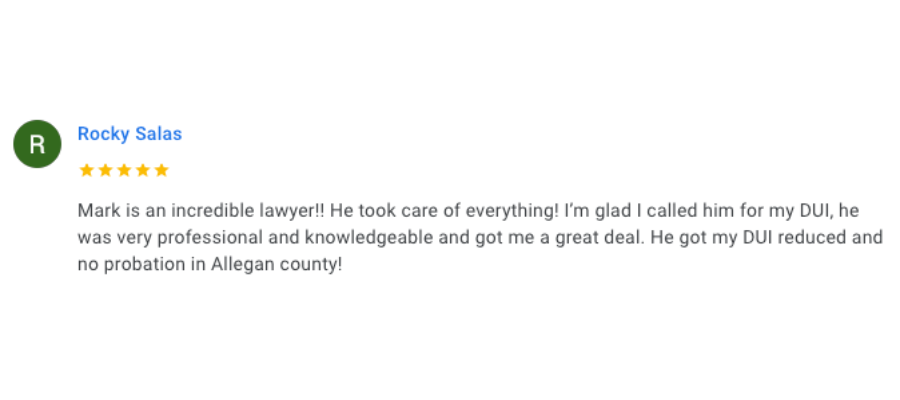
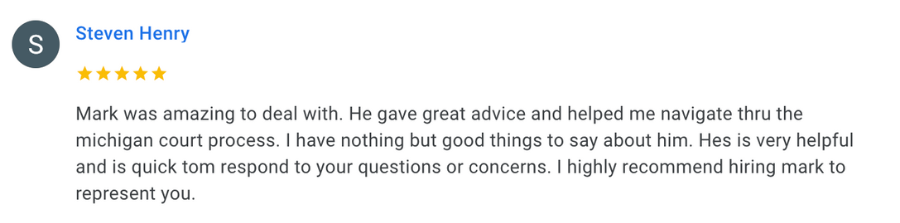
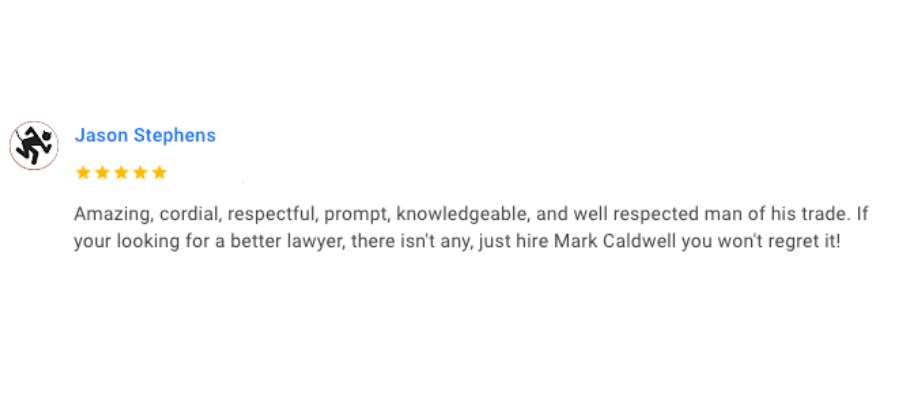
Take the best first step in protecting your future. Provide some basic information in the contact form below. We will then connect with you promptly (typically in the next 24 hours) to set up a free consultation:
Already have a DUI on your record? Learn more here about how Mark Caldwell can make that go away.

How a Drunk Driving Attorney in Grand Rapids Builds Your Case
Searching “OWI lawyer near me” usually means you want someone who already knows how Grand Rapids courts operate. A drunk driving attorney in Grand Rapids will walk you through every stage of your case, from arraignment through sentencing, so nothing catches you off guard.
Here’s how Mark Caldwell helps his clients WIN:
There are an overwhelming number of options for legal representation. Here are some honest and practical tips on finding the best one for you:


So the judge at his discretion can impose different penalties upon you. The first would be probation, if you get probation at all or how long your probation would be. The most probation that they could give on an OWI first would be two years of probation, but again you can cut that probation in half. Most judges are inclined now to not give probation if your BAC is low enough and you’ve completed the assessment, the victim impact panel, and the highway safety summit. The other penalty a judge can impose on you would be community service.
A lot of courts, you don’t have any community service at all. In other courts, you can have upwards of 120 hours of community service. It really varies by judge to judge how much community service they’re going to impose on you. The fourth penalty a judge can impose on you is jail. Typically, there’s no jail on an OWI first offense. With an OWI second, the minimum amount of jail they can give you is five days.
If you get into sobriety court, however, you don’t necessarily have to do any jail at all, but it really varies from judge to judge. There’s one judge in particular, if you have an OWI second offense, regardless if you get into sobriety court or not, he will give you 15 days in jail minimum.
In the state of Michigan, there’s a law that nobody knows about. It’s called the implied consent law. What that law is, by getting a license, you imply to consent to a breathalyzer at the police station. If you refuse that breathalyzer at the police station, then you’ve triggered the implied consent law, which is a one-year license suspension. You can refuse the breathalyzer on the side of the road.
That’s called a preliminary breath test. If you refuse that, that’s just a $150 civil infraction. When you refuse the breathalyzer at the police station, the officer will send that paperwork over to the Secretary of State. Now you have 14 days to request a hearing with the Secretary of State and they will give you a request for hearing form when they release you from jail. Once you receive that request for hearing and you don’t submit that request for hearing within 14 days, then you will not be getting your license back for a year.
When you submit the request for hearing within 14 days. It’ll trigger a hearing with the Secretary of State, which will be done online. Prior to the hearing, I usually have my clients write an apology letter to the officer trying to get them to withdraw from the hearing. Before we run the hearing, I will ask the hearing officer if I can have a minute to speak with the police officer. I will speak with the police officer, see if they’ve got the letter that you had written to them, and see if they’re willing to withdraw from the hearing. If they’re not willing to withdraw from the hearing, we’re most likely gonna lose the hearing because they only have to put four elements on the record.
The chances of winning an implied consent hearing are probably around 5%. So really the only way to win the hearing is to get the officer to withdraw from the hearing. If the officer won’t withdraw from the hearing and we lose the hearing, then the only other way to get your license is to do a circuit court hardship appeal. And that would be in the county that you were arrested in. I rarely lose circuit court hardship. I can only think in my lifetime I’ve lost one.
Hello, my name is Mark Caldwell. I’m here to discuss the sobriety court process with you. Individuals will call me that have two drunk drivings within seven years or three in a lifetime. What this video will explain is the requirements to get in sobriety court, the process of sobriety court and what it all entails in which counties have it and will they allow for transfers of sobriety court. The benefits of sobriety court other than maintaining your sobriety would be that you would get a sobriety court license as well as get no jail or reduced jail.
As to the sobriety court license, it is with an ignition interlock. Usually you have to do at least 45 days in sobriety court before they will issue you your license, which means you’re gonna have to get a ride to sobriety court for those 45 days. Some sobriety courts, however, require up to six months without a license before they will issue it, such as Mount Pleasant, As to the no jail and reduced jail, typically if you’re in a district court and you get sobriety court, you’re not going to do any jail. However, at the 63rd District Court, if you do get into sobriety court, you will be doing 15 days in jail. With circuit courts, some judges don’t require jail if you get into sobriety court. Other judges typically require 30 days.
People call me and ask me, what is the process of sobriety court? The first thing is to submit an application. By submitting an application early, it reserves your spot in that sobriety court in case they happen to fill up. Once that application is submitted, however, they will not look to see if you’re eligible for sobriety court or a good candidate until they have received a drug and alcohol evaluation, as well as reviewed the police report. And they will also meet with you to make sure that you are a good fit.
Most courts require that you have an extreme addiction to alcohol or drugs or both to get into sobriety court. Some sobriety courts are much more lenient and some sobriety courts are very difficult to get in, but it really varies from court to court. The requirements for sobriety court are that you be a US citizen, that you be mentally and physically capable of participating in the sobriety court. You need to live in the county where you’re doing the sobriety court. And the last requirement is that you not appear on the sex offense registry or have committed any violent criminal offenses.
People ask me, can they get their sobriety court transferred? So if I’m a Grand Rapids resident and I go down to the Gun Lake Casino and I get a drunk driving down there and it happens to be my second drunk driving in seven years, but I don’t live down in Allegan County, I live in Kent County. Can you get your sobriety court transferred to Kent County? The answer is yes. There’s three sobriety courts in Kent County, which would be out of Kentwood, which is 62B District Court, and the 61st District Court, and then the 63rd District Court. The 63rd District Court will not allow transfers, but the other two courts will allow transfers. Now, it’s not always the case that counties will allow transfers. I know in one particular, Montcalm does not allow transfers from other counties. They only take cases that arose in that county.
When you get into sobriety court, you’ll wonder what is this sobriety court about, what it entails, what do you have to do? Now, typically your sobriety court’s gonna be between 12 and 24 months. In some courts, if you’re doing well in sobriety court, you’ll get released early, which would be at the 18 month mark. When you’re in sobriety court, some sobriety courts require that you first be put on a tether and that you have the tether on for 90 days as the sobriety court process begins. Also, you’ll have to complete community service. You’ll have to attend AA. Some courts require that you attend five to seven times a week. You’ll have to do community service. You’ll have to do regular testing. And there also is phases of sobriety court.
So when you start out, there’s going to be more testing involved with phase one. As you progress through the sobriety court, through the different phases, you’ll have to test less and less. And you just have to meet biweekly with the sobriety court team. Usually they’ll have those in the afternoons, like Friday or Monday afternoon, where you meet with all the participants and the judge that runs the sobriety court. So you do have to have an employer that’s willing to work with you while you’re in sobriety court, especially when you need to go test in the morning. You need employers that are flexible that allow you to go test.
You can reach me at my cell phone, which is 616.915.6576, you can also text me at that number or you can email me. If I don’t answer the phone it means that I am either with a client or working at one of the courthouses and I will get back with you as soon as possible.
When you get an OWI the process through the courts is you have to have an arraignment first, a pretrial after that, a settlement conference, and then a plea on sentencing.
However, in some courts, you can have a plea in sentencing at the pretrial and take care of it all at once. In other courts, you have to have each stage of the process. Some courts are very efficient and some are not.
I would say the whole process on average can be three weeks to up to six months.
At the arraignment is where the judge puts bond conditions on you. The typical bond conditions are going to be no drugs and alcohol, and you can’t leave the state without permission. Then, they’ll have you sign a bond condition form.
Those bond conditions will continue with you until your sentencing date. Once you’re sentenced, if you get probation, then you’ll have probation conditions, which will be the same typically as your bond conditions.
When you’re on bond they can test you for drugs and alcohol. If you do test positive, they can revoke your bond. And then you’re going to be sitting in jail for the duration of your case, which could be quite a long time. For the pretrial conference?
When you want to prepare.
It’s generally a good idea to try to get your assessment completed, which is required by the state of Michigan, as well as completing classes such as the victim impact panel or the Highway Safety seminar.
The victim impact panel you can do online. It’s about an hour and a half and cost $35.
The highway safety seminars, also online. It’s $125 and it takes about four hours.
If you go to the pretrial and you have that all completed, generally you can also be sentenced at that pretrial as well. As it looks good to have that completed when I’m trying to get a reduction from the prosecutor.
When you go in to do the assessment?
Usually you’ll call me a couple days before the assessment, and I’ll prepare you on what questions you’ll be asked at the assessment. The assessment is a drug and alcohol assessment.
So I’ll ask you questions such as:
- “When was the last time you had a drink?
- “How often do you drink?”
- “When you drink and how much do you drink when you drink?”
- “Have you used any other drugs? If so, what drugs?”
They’ll also ask you routine questions, such as where you’re employed at.
Do you have a family additionally at the assessment, they’re going to have you fill out a 135 form, yes or no, a questionnaire called the Needs Assessment.
When you go to court, after you’ve completed the assessment and the two classes or additional counseling, if need be, if this is a second or third drunk driving.
Then I submit those documentation to the prosecutor, in hopes of trying to get a reduction in your plea.
It varies from county to county in West Michigan as to what kind of reductions I can get. And when you’re sentenced, it varies from judge and judge. You can have one courthouse with two different judges and get completely different results.
In the sentencing for an order, we would typically include probation, community service fines and costs and possibly jail on a first offense.
Usually jail is not going to be a part of that outcome.
A jail sentence also depends on a couple of additional factors such as:
- How high your BAC (Blood Alcohol Content) level was.
- Did you hit another vehicle?
- Do you have prior drunk driving?
You have any of those, jail becomes more likely.
So the judge, at their discretion, can impose different penalties upon you with a Michigan OWI charge. The first would be probation: Do you get probation at all? If so, how long will your probation be?
The most probation that they could give on an OWI first would be two years of probation. But again, you can cut that probation in half.
Most judges are inclined now to not give probation if your BAC (Blood Alcohol Content) is low enough and you’ve completed the assessment, a victim impact panel and a highway safety seminar.
The other penalty a judge can impose on you would be community service. In a lot of courts, you don’t have any community service at all. And other courts you can have upwards of 120 hours of community service. It really varies by judge to judge how much community service they’re going to impose on you.
The fourth penalty a judge can impose on you as jail. Typically there’s no jail for an first offense with an OWI
Second, the minimum amount jail they can give you is five days. If you get into sobriety court, however, you don’t necessarily have to do any jail at all, but it really varies from judge to judge.
There’s one judge in particular who – regardless if you’re going into sobriety court or not – will give you 15 days in jail (minimum) for a second OWI offense.
The difference between a PBT and refusing the breathalyzer at the jail is that the PBT, (which is also called the preliminary breath test) is $150 civil infraction.
Usually that gets dropped so it’s not a big deal. However, if you refuse the breathalyzer at the jail or when read your chemical test rates in your refuse that triggers the implied consent violation, which nobody knows about.
But it ends up being a one year license suspension. So it’s a big deal.
The counties in West Michigan that have sobriety court would be Kent County, Ottawa County, Allegan County, Barry County, and then there’s the tri-county sobriety court, which entails Mott, Com, Gratiot, and Clinton County. With Ottawa County, there are three sobriety courts there. There’s one in Hudsonville, Holland, and then Grand Haven.
In Kent County, there are also three sobriety courts, one at 62B Kentwood District Court, one in downtown Grand Rapids at the 61st District Court, and then one at Knapp’s Corner with the 63rd District Court.
You can also get denied at 61st District Court and then still make an application to the 62B District Court in Kentwood. Newaygo County has no sobriety court. However, if you get a drunk driving within two within seven or three in a lifetime, you can possibly get transferred to the Tri-County Sobriety Court.
You can reach me at my cell phone, which is 616.915.6576, you can also text me at that number or you can email me. If I don’t answer the phone it means that I am either with a client or working at one of the courthouses and I will get back with you as soon as possible.
Could Sobriety Court Help Your Case?
Sobriety court is generally available to drivers with two OWI offenses within seven years, or three in a lifetime. A sobriety court lawyer in Grand Rapids courts can walk you through eligibility before you apply.
Benefits often include a restricted license with an ignition interlock, along with reduced or eliminated jail time. Programs typically run 12 to 24 months, with early release possible for participants doing well.
Facing a DUI/OWI Charge Can Be Scary And Confusing
The best thing you can do is schedule a free consultation with a DUI lawyer Grand Rapids clients recommend right away. It also helps to understand how the Michigan court system works so you can feel confident making the right decision.
Here’s what you should know about Michigan drunk driving offenses and their associated penalties.

1st Offense
Low BAC Offenses (.16 or lower)
OWI (Operating While Intoxicated) or Operating With Any Presence of a Schedule 1 Drug or Cocaine (OWPD)
$100 to $500 fine and one or more of the following:
- Up to 93 days in jail
- Up to 360 hours of community service
- Driver’s license suspension for 30 days, followed by restrictions for 150 days
- Possible vehicle immobilization
- Possible ignition interlock
- Six points added to the driver’s record

1st Offense
High BAC Offenses (.17 or lower)
OWI (Operating While Intoxicated) or Operating With Any Presence of a Schedule 1 Drug or Cocaine (OWPD)
$200 to $700 fine and one or more of the following:
- Up to 180 days in jail
- Up to 360 hours of community service
- One-year license suspension
- The Secretary of State may issue a restricted license 45 days after the suspension starts if the person is otherwise eligible.
- Proof of installation of an ignition interlock device is required before a restricted license will be issued.

2nd Offense
Any combination, within seven years
A second offense OWI lawyer Grand Rapids clients hire is working with steeper consequences than a first arrest carries.
$200 to $1,000 fine and one or more of the following:
- Five days to one year in jail
- 30 to 90 days of community service
- Driver’s license denial or revocation for a minimum of one year
- License plate confiscation
- Vehicle immobilization for 90 to 180 days, unless the vehicle is forfeited
- Possible vehicle forfeiture
- Six points added to the driver’s record

3rd Offense
Felony, within ten years
$500 to $5,000 fine and one or more of the following:
- One to five years imprisonment
- Probation with 30 days to one year in jail
- 60 to 180 days of community service
- Driver’s license denial or revocation for a minimum of one year
- License plate confiscation
- Vehicle immobilization for one to three years, unless the vehicle is forfeited
- Possible vehicle forfeiture
- Registration denial
- Six points added to the driver’s record
Know Your Rights
Legal resources and guides so to understand the Michigan OWI process:
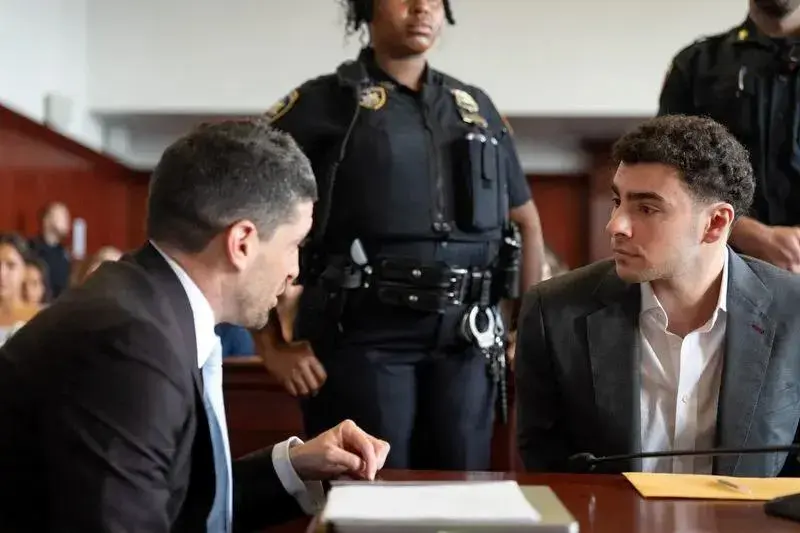
HYTA Michigan: What Young Adults Need to Know Before Pleading Guilty
HYTA Michigan allows eligible people who committed certain offenses between ages 18 and 25 to plead guilty and receive youthful … Read more
Personal Protection Order Michigan: Can It Affect Your Criminal Case?
A Michigan PPO is a civil proceeding. A criminal case is a separate prosecution brought by the state for an … Read more
Michigan DUI Guilty Plea: What Consequences Can You Face?
If you are weighing a guilty plea, you need to know the DUI guilty plea consequences Michigan courts actually impose, … Read more
FAQs
For a first-time DUI in Michigan, most lawyers charge between $1,000 and $5,000, depending on the case. More serious or repeat offenses can cost more. Mark Caldwell offers free consultations to walk through your options and costs.
Refusing a post-arrest breathalyzer can trigger a one-year license suspension in Michigan. You have 14 days to request an implied consent hearing. An implied consent hearing lawyer Michigan drivers trust can help you understand your options.
You need a lawyer with real experience handling DUI and OWI cases specifically. An attorney who understands local laws, penalties, and defenses can help protect your license, record, and rights.
The best defense depends on your case details. Common approaches include challenging the traffic stop, questioning breathalyzer or blood test accuracy, or proving the officer didn’t follow proper procedure.
Once a suspension or revocation period ends, your license doesn’t return automatically. A DUI license restoration lawyer helps prepare the documentation and hearing testimony the Secretary of State requires before reinstating driving privileges.
Look for experience handling DUI and OWI cases, a strong track record, and solid knowledge of local courts. A free consultation is the easiest way to see if an attorney is the right fit.