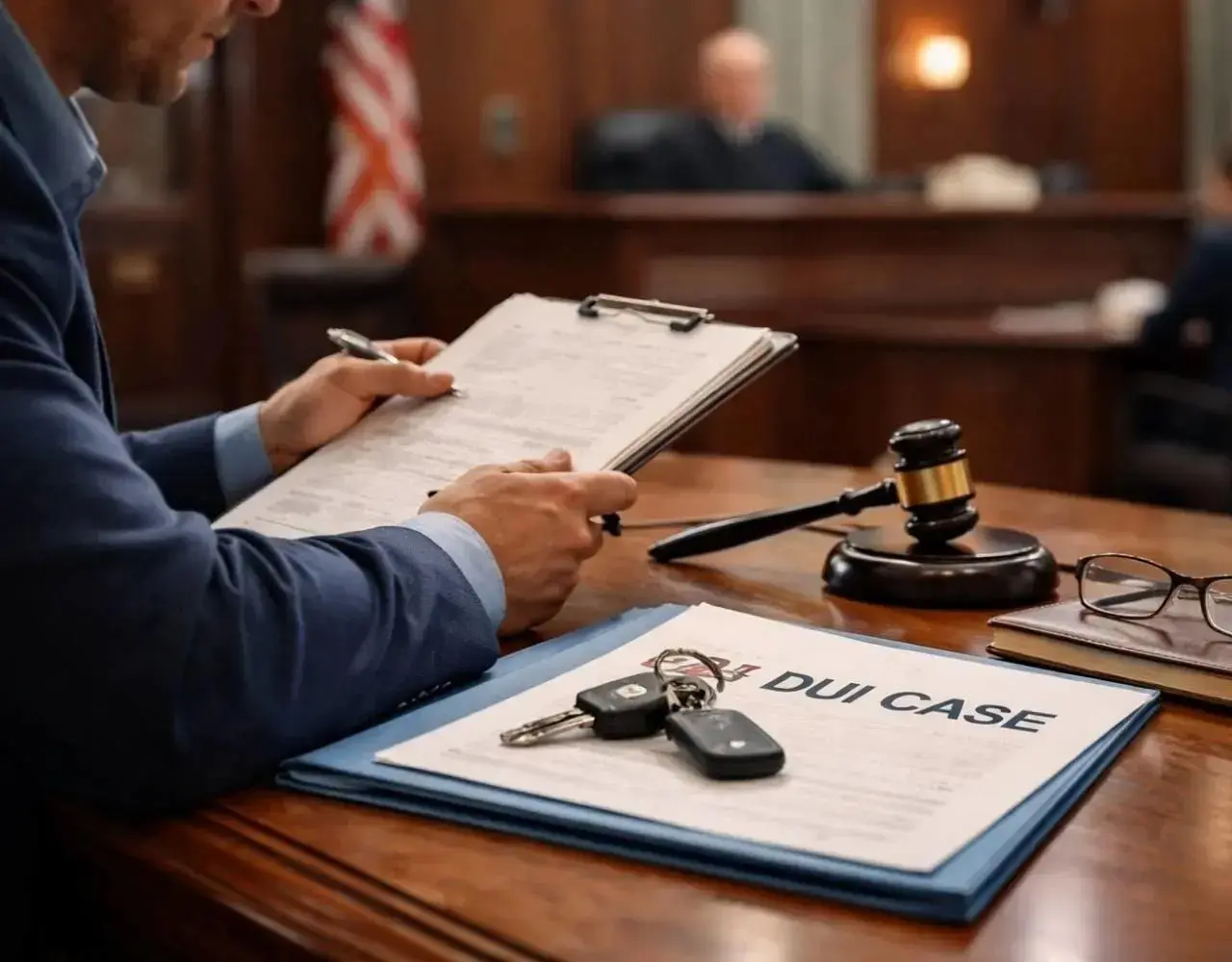
A Michigan PPO is a civil proceeding. A criminal case is a separate prosecution brought by the state for an alleged criminal offense. The two can overlap when they arise from the same incident or the same relationship, but one does not automatically decide the other. A PPO restricts a person’s contact or conduct toward another person. A criminal charge accuses a person of violating Michigan criminal law and carries its own process, evidence rules, and potential penalties. When both exist at the same time, the restrictions in the PPO still apply regardless of what happens in the criminal case, and the outcome of one proceeding does not automatically determine the outcome of the other.
_____________________________________________________________________
A personal protection order in Michigan is generally a civil court order, not a criminal conviction. It can still affect a related criminal case when the PPO and criminal allegations arise from the same events. The order may restrict contact, communication, travel, or other conduct. Violating those restrictions can also lead to criminal contempt proceedings. The effect on a criminal case depends on the specific PPO, the allegations, the available evidence, and the charges involved.
What to Know About Michigan PPOs
- A PPO is a court order that can restrict specific conduct or contact.
- A PPO is separate from a criminal conviction.
- A criminal case can continue even if a PPO is later dismissed or expires.
- Violating a PPO can result in arrest and criminal contempt proceedings.
- The exact restrictions depend on the language of the order.
- A protected person’s permission does not automatically cancel a court order.
What Is a Personal Protection Order in Michigan?
Definition: A Michigan PPO is a civil court order that restricts a person’s contact or conduct toward another person. It is not a criminal conviction and does not prove the allegations against the respondent.
Under MCL 600.2950, domestic relationship PPOs can apply to spouses, former spouses, dating partners, and household members. MCL 600.2950a covers stalking or nondomestic PPOs.
A judge can issue a PPO without first hearing from the respondent. Once served, the respondent must follow the restrictions in the order. The exact wording determines what conduct or contact is prohibited.
Does a PPO Mean You Have Been Criminally Charged?
Myth: Getting served with a PPO means you have been convicted of a crime or formally charged.
Fact: A PPO is generally a civil protective order. A criminal charge requires a separate process that starts with a police report, an investigation, and a prosecutor’s decision to authorize charges.
A PPO can be granted on a petitioner’s sworn statements alone, without a criminal complaint ever being filed. In other cases, the same incident is also reported to the police, and a prosecutor later authorizes a charge. Both can happen from one dispute, but neither automatically triggers the other. A judge can grant a PPO without any criminal charge existing, and a prosecutor can authorize charges even if no PPO was ever requested.
Can a PPO Affect a Criminal Case in Michigan?
This is where the two proceedings most often intersect, without one becoming proof of the other.
The underlying allegations
The facts a petitioner used to request the PPO may be the same facts described in a police report or a criminal complaint. The incident is the common thread, not the order itself.
Statements and evidence
Messages, photographs, videos, witness statements, and police reports connected to the PPO case may become relevant in the criminal case depending on the facts and the rules of evidence that apply in Michigan court.
Restrictions during the criminal case
The PPO can independently restrict communication with the alleged victim while a criminal case is pending, even if bond conditions in the criminal case say something different. The stricter restriction generally controls.
Separate legal proceedings
A PPO hearing and a criminal prosecution have different purposes, different procedures, and different standards of proof. A PPO petition typically requires a lower standard than a criminal conviction, which requires proof beyond a reasonable doubt. Anyone unsure how the two proceedings interact in their own case should talk to a criminal defense attorney in Grand Rapids before responding to either matter.
A PPO does not decide whether someone is guilty of a crime. A criminal court determines criminal responsibility through the criminal process. This is the core reason a personal protection order Michigan filing should never be treated as a substitute for a criminal trial.
PPO vs Criminal Charge Michigan: What Is the Difference?
Understanding the PPO vs. criminal charge Michigan distinction is one of the first things a respondent should do.
| PPO | Criminal Charge |
| Generally a civil protective order | Criminal prosecution |
| Restricts specified conduct | Accuses a person of committing a crime |
| Can restrict contact or other behavior | Can lead to criminal penalties if the person is convicted |
| Can be issued in qualifying circumstances | Requires a criminal charging process |
| Violation can result in criminal contempt | Case proceeds through the criminal court process |
| Does not itself establish criminal guilt | Requires the prosecution to prove the charged offense |
What Happens If You Violate a Michigan PPO?
A PPO violation is not treated like breaking an ordinary civil order. Michigan law authorizes immediate arrest and criminal contempt penalties for violating the specific terms of the order.
Conduct that commonly leads to an alleged violation includes:
- Contacting the protected person when the order prohibits contact
- Sending messages, calls, or social media contact
- Going to a location the order prohibits
- Using a third party to make contact on your behalf
- Violating another specific restriction written into the order, such as a firearm restriction
The exact language of the PPO controls what conduct is prohibited. One order might restrict only physical presence at a home or workplace. Another might prohibit any form of contact, direct or indirect. Reading the order carefully is the only way to know what is actually off limits.
Is Violating a PPO a Felony or Misdemeanor in Michigan?
The answer depends on the type of violation. Under MCL 600.2950(23), MCL 600.2950a, and MCL 764.15b, violating a domestic relationship or stalking PPO is generally treated as criminal contempt of court, punishable by up to 93 days in jail and a fine of up to $500. This is not automatically classified the same way as a standard misdemeanor or felony conviction, but it is a criminal penalty and it appears on a person’s record.
The analysis changes when the alleged conduct behind the violation is also a separate crime. If the alleged conduct involves repeated contact that meets the legal definition of stalking, Michigan law allows a charge of aggravated stalking under MCL 750.411i, which is a felony.
If the alleged conduct involves an assault, a threat, or another criminal act, that conduct can be charged separately from the PPO violation itself. Michigan law states a clear legislative intent that criminal penalties for a PPO violation apply in addition to any separate criminal charge arising from the same conduct, and Michigan courts have held that charging both does not violate double jeopardy protections.
Can a PPO Be Used Against You in a Criminal Case?
The existence of a PPO does not automatically establish criminal guilt. A few points matter here:
- A PPO can be granted on a lower standard of proof than a criminal case requires.
- The underlying allegations behind the PPO may overlap with evidence gathered in the criminal case.
- The specific wording of the order and the evidence supporting it both matter.
- Michigan evidentiary rules determine what a court can actually consider in the criminal case.
- Each case has to be evaluated on its own facts, not assumptions about how PPOs and criminal cases usually interact.
What This Means: A PPO is a factor to understand, not proof of guilt. A criminal defense attorney reviews the specific evidence rather than treating the PPO as a conclusion.
What Should You Do After Being Served With a PPO?
- Read the entire order from start to finish.
- Follow every restriction exactly as written, even ones that seem minor.
- Do not contact the protected person if contact is prohibited.
- Do not assume a verbal request to talk cancels the order.
- Preserve relevant documents, messages, and other communications.
- Do not discuss the case publicly or on social media.
- Determine whether a hearing date or response deadline applies to your case.
- Speak with an attorney if a related criminal allegation exists, since the PPO and the criminal matter often need to be reviewed together.
Anyone weighing legal representation at this stage benefits from talking to a domestic violence defense attorney who can look at the PPO and any related criminal exposure as one picture rather than two separate problems.
What If the PPO Is Dismissed?
Dismissal or expiration of a PPO does not automatically resolve a separate criminal case. A civil protective order and a criminal prosecution can run on different timelines with different outcomes, since a prosecutor’s decision to pursue or dismiss a criminal charge does not depend on what happens with the PPO. Someone should never assume that a dismissed PPO means a pending criminal charge will also be dropped.
How Can a Grand Rapids Domestic Violence Lawyer Help?
A PPO attorney in Grand Rapids, MI, who focuses on these cases looks at the full picture rather than just the PPO paperwork or just the criminal complaint. That typically includes:
- Reviewing the language of the PPO
- Reviewing the police report and any witness statements
- Understanding the specific allegations behind both matters
- Evaluating the evidence available on each side
- Explaining what the order actually restricts
- Preparing for a PPO hearing or a criminal court date
- Assessing how a related criminal charge fits into the overall strategy
- Protecting the client’s rights throughout both proceedings
In some domestic violence cases, deferred disposition in Michigan may be worth discussing with an attorney, though not every case qualifies. A PPO does not decide whether that option applies, and the specific facts of the criminal charge control that analysis. Anyone weighing these options benefits from talking to a Grand Rapids domestic violence lawyer before a hearing date arrives.
The Bottom Line
A Michigan PPO and a criminal case are separate matters, but they can overlap. A PPO is not proof of guilt, but violating its terms can create additional criminal consequences.
If you have been served with a PPO or face a related criminal allegation, a PPO attorney in Grand Rapids, MI, can review the order and your criminal case together. Schedule a free consultation with Mark Caldwell to discuss your situation.
Frequently Asked Questions
- Can a personal protection order affect a criminal case in Michigan?
Yes, in some circumstances. A PPO and a criminal case are separate proceedings, but the same underlying incident, evidence, or restrictions can connect the two. A personal protection order Michigan case does not by itself decide the outcome of a related criminal charge.
- Is violating a PPO a felony or misdemeanor in Michigan?
Violating a PPO is generally treated as criminal contempt of court under MCL 600.2950(23) and MCL 764.15b, punishable by up to 93 days in jail and a $500 fine. If the underlying conduct also meets the definition of a separate crime, such as aggravated stalking, that separate conduct can be charged as a felony.
- Does a PPO mean you have a criminal record?
A PPO by itself is a civil order and is not the same as a criminal conviction. However, being found in violation of a PPO can result in a criminal contempt record, and that record can show up on background checks.
- Can the protected person contact me if there is a PPO?
The protected person’s decision to reach out does not cancel the order. The order restricts the respondent’s conduct, and the respondent remains responsible for following its terms until a court changes it.
- What happens if I accidentally violate a PPO?
Any contact prohibited by the order can be treated as a violation, regardless of intent to cause harm. Contacting a criminal defense attorney immediately is the safest step if this happens.
- Can a PPO violation lead to another criminal charge?
Yes. Michigan law allows a PPO violation to be charged in addition to any separate criminal offense arising from the same conduct, and courts have upheld this without treating it as double jeopardy.
- When should I contact a criminal defense attorney about a PPO?
As soon as possible after being served, especially if a related criminal allegation, investigation, or charge already exists, since the two matters often need to be reviewed together rather than handled separately.