In Michigan, a driver under 21 can be charged under the state’s Zero Tolerance law with a BAC of 0.02% or higher, even below the standard 0.08% adult limit. A first offense is typically a civil infraction with a fine, license restrictions, and community service. A BAC of 0.08% or higher brings full adult OWI penalties instead. Exact outcomes depend on the facts of the stop and the driver’s history.
___________________________________________________________________________
An underage DUI in Michigan is not treated the same as an adult drunk driving charge. Michigan’s Zero Tolerance law sets a much lower BAC threshold for drivers under 21, so a young driver can face consequences long before they’d be considered legally intoxicated under the standard rule. If your child was arrested, or you’re a young driver trying to understand what happens next, this guide breaks down the law, the process, and the penalties in plain terms.
Michigan’s 0.02 BAC Rule for Drivers Under 21
Michigan’s 0.02 BAC law applies to any driver under 21 who operates a vehicle with a blood alcohol content of 0.02% or more but less than 0.08%. This is known as the Zero Tolerance law, codified under Michigan’s vehicle code.
The standard adult limit is 0.08%. For drivers under 21, the bar is set far lower, and 0.02% can be reached with a single drink depending on body weight and timing.
Here’s the practical distinction:
- 0.02% to 0.07%: Charged under Michigan’s Zero Tolerance provision for underage drivers
- 0.08% or higher: Charged as a standard OWI, with the same penalties an adult would face
Having any measurable alcohol in the system is different from being legally intoxicated, but Michigan law does not require intoxication for an underage driver to be charged. The specific outcome always depends on the applicable statute and the facts of the stop.
What Happens When Someone Under 21 Is Arrested?
Every case moves through roughly the same stages, though the details vary based on the circumstances.
- Traffic stop or investigation: An officer stops the vehicle for a traffic violation or observes signs of impairment.
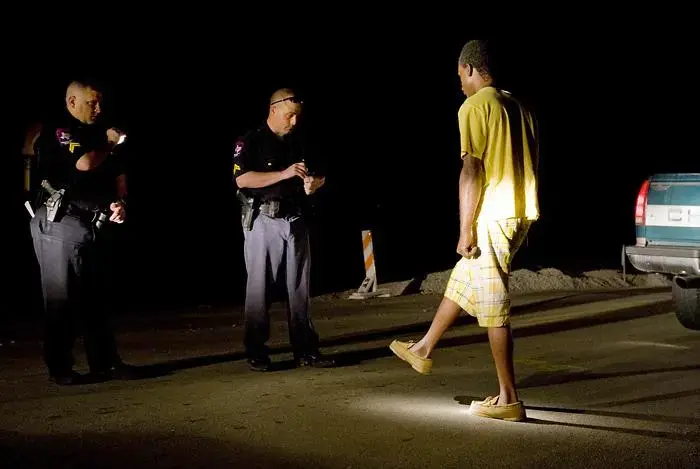
- Field sobriety testing: The officer may ask the driver to perform standard tests, though this doesn’t happen in every stop.
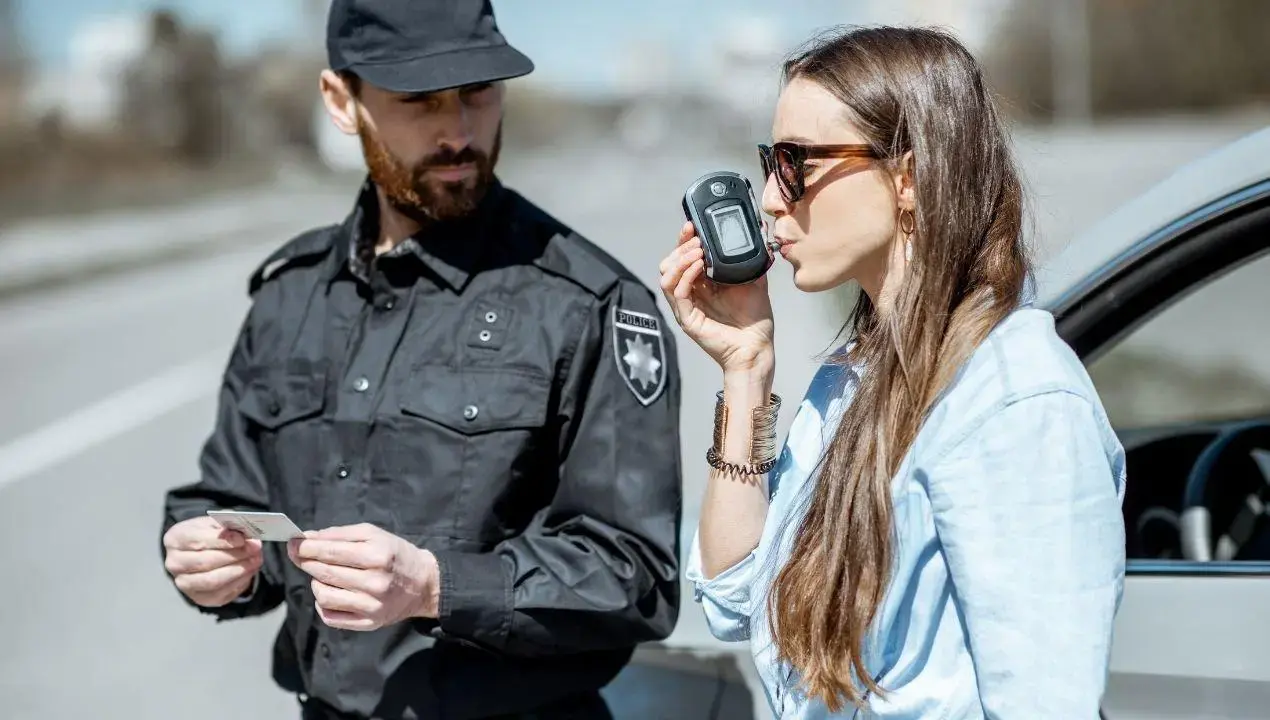
- Chemical or breath testing: A preliminary breath test or chemical test measures BAC.
- Arrest or citation: Depending on the BAC and circumstances, the driver is arrested or cited.
- Booking or release: The driver may be released to a parent or guardian, especially if they’re a minor.
- Prosecutorial review: The prosecutor’s office reviews the case and decides how to proceed.
- Court proceedings: The driver appears in court, where the charge is addressed.
- License consequences: Secretary of State action may run on a separate timeline from the court case.
- Case resolution: The case ends in a plea, dismissal, trial, or another outcome, depending on the facts.
Not every case follows this exact path. Some steps may look different depending on the county, the officer’s assessment, and whether the driver has a prior record.
What Are the Penalties for an Underage DUI in Michigan?
A first-offense underage DUI Michigan charge is generally treated as a civil infraction, not a criminal one, when the BAC falls between 0.02% and 0.07%. That said, the consequences are still real and can follow a young driver.
| Consequence | What It Can Involve |
| Fine | A court-imposed financial penalty, often in the low hundreds of dollars for a first offense |
| License consequences | Restriction or suspension, with the length depending on the offense and record |
| Community service | May be ordered by the court, with hours set by the judge |
| Court requirements | Conditions vary by case and county |
| Criminal record | A first offense at 0.02% to 0.07% is typically civil, not criminal, but a 0.08%+ charge is criminal |
| Insurance | A conviction can raise insurance costs for a period of time |
| Education or treatment | A substance abuse assessment or class may be required |
These figures are general ranges, not guarantees. Penalties depend on the judge, the county, the driver’s exact BAC, and any prior record.
Underage DUI vs. Standard OWI in Michigan
Parents often assume their child’s case will unfold like an adult OWI. It usually doesn’t. Here’s how the two compare.
| Factor | Underage Zero Tolerance | Standard OWI |
| Driver’s age | Under 21 | Any age |
| BAC threshold | 0.02% to 0.07% | 0.08% or higher |
| Offense type | Typically a civil infraction (first offense) | Criminal misdemeanor or felony |
| Potential penalties | Fine, community service, license restriction | Fines, possible jail, license suspension, mandatory treatment |
| License consequences | Restriction, often shorter in duration | Suspension or revocation, often longer |
| Role of prior offenses | Can enhance a later charge to a second OWI offense | Significantly increases penalties |
This is why an underage DUI in Michigan at 0.02% to 0.07% is often resolved differently than an adult case, even though both involve alcohol and driving.
How Underage Drinking and Driving Can Affect a Young Driver
The consequences of an alcohol-related charge often extend past the courtroom.
- Driving record. A conviction can appear on the driving record and affect future insurance applications.
- Insurance. Rates can increase after a conviction, though the amount and duration vary by insurer.
- School. Some schools have codes of conduct that address off-campus legal issues, particularly for student-athletes or scholarship recipients.
- Employment. Jobs that involve driving may review an applicant’s record, and a conviction could factor into that review.
Future opportunities. While a single charge rarely defines a young person’s future, underage drinking and driving in Michigan are worth taking seriously precisely because the downstream effects can be harder to predict than the court penalty itself.
What If the BAC Is Below 0.08%?
A BAC under 0.08% does not mean a driver under 21 is in the clear. Michigan’s 0.02 BAC law applies specifically to this lower range.
For example, a driver under 21 who tests at 0.03% is below the adult legal limit but still within the range that can trigger a Zero Tolerance charge. The outcome depends on the stop, the testing, and the specific facts, not just the number on the test.
Does a First Offense Still Lead to Serious Consequences?
Yes. A first offense doesn’t automatically mean the case disappears or carries no license consequences.
First offenses are usually treated as civil infractions, but the court can still impose a fine, community service, and license restrictions. The facts of the stop, the accuracy of the testing, and any prior driving history can all affect how the case is handled. A clean record helps, but it isn’t a guarantee. This is one reason an underage OWI Michigan charge should be reviewed carefully rather than assumed to be minor.
What Should Parents Do After an Underage DUI Arrest?
- Find out exactly what your child was cited or arrested for, including the specific charge and BAC level.
- Keep copies of everything: the ticket, police paperwork, chemical test results, court documents, and any Secretary of State notices.
- Pay attention to deadlines. License-related deadlines can run separately from court dates, and missing one can limit your options.
- Avoid assuming the police report tells the whole story. It’s one piece of the case, not the final word.
- Talk to a Michigan DUI defense attorney early. Understanding what happens if my child gets a DUI in Michigan starts with knowing the charge, the deadlines, and the options available before the first court date.
What a Michigan DUI Defense Attorney Can Review
An attorney can look at several parts of the case before deciding how to proceed:
- The reason for the traffic stop
- The arresting officer’s observations and reports
- Field sobriety test administration
- Breath or chemical testing procedures and timing
- Statements made during the stop
- Possible search and seizure issues
- Whether the charge matches the available evidence
Not every case has a strong defense, and no attorney can guarantee a specific result. A careful review is what determines whether one exists.
What Happens If My Child Gets an Underage DUI?
It depends on the BAC, the facts of the stop, and your child’s record, but a few things are consistent. The charge should be taken seriously, even if it’s a first offense. Court and license matters can run on separate timelines. Getting the paperwork together and confirming the next court date are the first practical steps. From there, a Michigan DUI attorney can review the case and walk you through the realistic options.
Why Early Legal Advice Matters
Getting legal advice early gives an attorney time to review the evidence before memories fade or records go stale. License consequences can move on a different clock than the criminal case, so early action matters. Parents often confuse an arrest, a charge, and a conviction, and those are three very different things. An attorney can explain what the prosecution actually has to prove and what strategy fits the facts of your case.
How an Underage DUI Case Can Move Forward
Arrest or citation → Charge review → License action → Court proceedings → Defense strategy → Resolution
The timeline varies by county and case complexity. There’s no fixed date by which a case resolves, and no outcome is guaranteed in advance.
Conclusion
An underage DUI Michigan case can carry real consequences even when the driver’s BAC is well below the adult legal limit. The Zero Tolerance law sets a low bar, but the process, the penalties, and the options available still depend on the specific facts.
If your child was arrested, or you’re a young driver facing a charge, contact Mark Caldwell Law to discuss the details of your case and what steps make sense from here.
FAQs
- What is the BAC limit for drivers under 21 in Michigan?
Drivers under 21 can be charged under Michigan’s Zero Tolerance law with a BAC of 0.02% or higher. This is far lower than the standard adult limit of 0.08%.
- Can you get an underage DUI in Michigan with a BAC below 0.08%?
Yes. A BAC between 0.02% and 0.07% can result in a Zero Tolerance charge for a driver under 21, even though it’s below the adult legal limit.
- What are the penalties for an underage DUI in Michigan?
A first offense is typically a civil infraction with a fine, possible license restriction, and community service. Penalties increase for a BAC of 0.08% or higher or for repeat offenses.
- Does a first underage DUI suspend your license in Michigan?
License consequences vary by case, but a restriction or suspension is possible even on a first offense. The length depends on the BAC level and the specific circumstances.
- When should I contact a Michigan DUI attorney?
As soon as possible after an arrest or citation. Early legal advice helps you understand the charge, track deadlines, and evaluate the options before the first court date.
- Is an underage DUI a criminal offense in Michigan?
A first offense between 0.02% and 0.07% BAC is typically civil rather than criminal. A BAC of 0.08% or higher is charged as a standard, criminal OWI.
- What happens to a first-time underage OWI Michigan case?
Outcomes depend on the exact BAC, the facts of the stop, and the driver’s record. Most first offenses are handled as civil infractions rather than criminal charges.