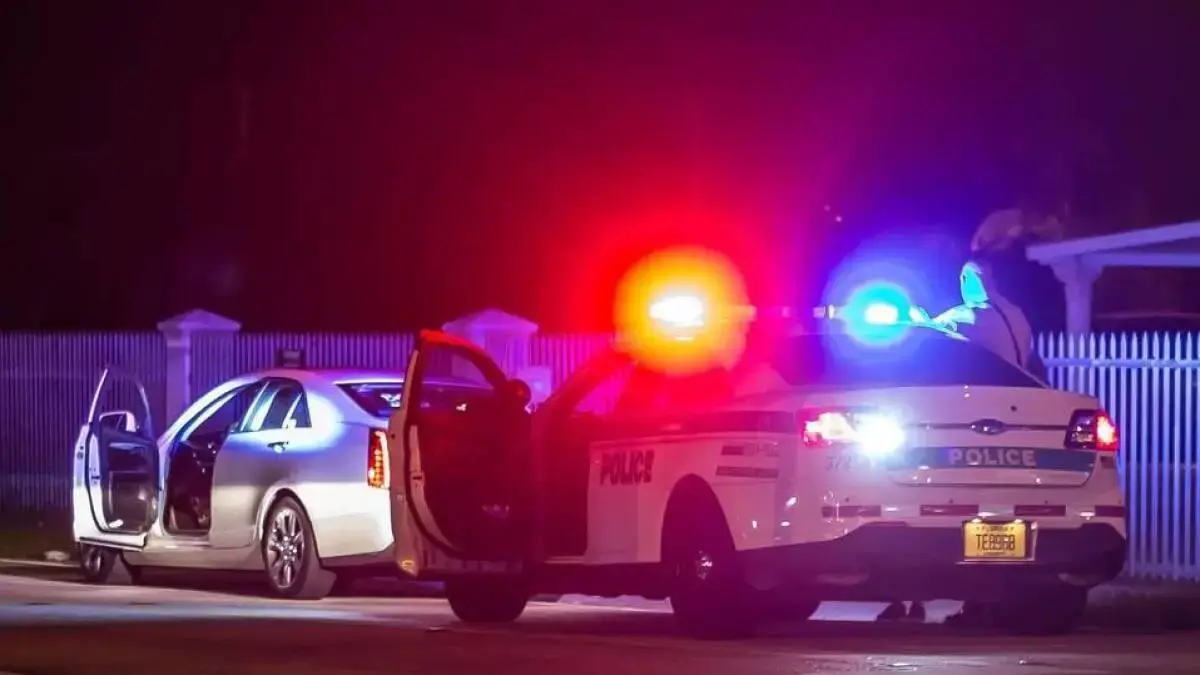
You didn’t plan for this. One moment you were driving home — the next, there were blue lights in your rearview mirror, and now you’re sitting with an OWI charge in Kent County, Michigan, wondering what on earth comes next.
If you’ve been arrested for drunk driving in Grand Rapids, the most important thing to know right now is this: an OWI arrest is not a conviction. You have rights, you have options, and the outcome of your case is not yet decided.
As a Grand Rapids OWI attorney with nearly two decades of experience and over 2,000 drunk driving cases handled right here in Kent County, I’ve walked hundreds of people through every stage of this process. This guide will tell you exactly what happens — step by step — so you can stop guessing and start making smart decisions.
| Quick note on terminology: In Michigan, the official charge is OWI (Operating While Intoxicated) — not DUI. They refer to the same offense. Both terms appear throughout this article. For a deeper look at the difference, see our guide: OWI vs. DUI in Michigan. |
Step 1: The Traffic Stop and Arrest
Everything starts with a traffic stop. Michigan police must have reasonable suspicion to pull you over — a lane violation, a broken taillight, speeding, or erratic driving. This is critically important: if the stop itself was illegal, everything that follows — including your test results — may be thrown out.
Once stopped, the officer will look for signs of impairment: slurred speech, bloodshot eyes, the odor of alcohol. If they suspect intoxication, they’ll ask you to perform Standardized Field Sobriety Tests (SFSTs) — the walk-and-turn, the one-leg stand, and the horizontal gaze nystagmus test.
You are not legally required to perform field sobriety tests in Michigan. Many people don’t know this. Refusing them carries no automatic license penalty — though officers may still arrest you based on other observations.
| KEY DEFENSE POINT: Field sobriety tests are notoriously subjective. Officer instructions, road conditions, your footwear, age, weight, or medical conditions can all affect performance. I scrutinize every SFST in every case I take. |
Step 2: The Breathalyzer or Blood Test
After arrest, you’ll be transported to the police station or jail for a chemical test — either a breath test on Michigan’s Intoxilyzer 9000 (recently replacing the older DataMaster DMT) or a blood draw. This is where your official BAC (blood alcohol content) is recorded.
Michigan’s implied consent law means that by driving on Michigan roads, you’ve already agreed to submit to a chemical test after a lawful arrest. Refusing this post-arrest test results in an automatic 1-year license suspension — separate from any OWI penalties.
The BAC thresholds that determine your charge:
- 0.08%+ — Standard OWI (Operating While Intoxicated)
- 0.17%+ — OWI with High BAC, known as “Super Drunk” — much more severe penalties
- 0.02%+ (under age 21) — Zero tolerance offense
- 0.04%+ (CDL holders in commercial vehicles) — Lower limit, serious CDL consequences
Breathalyzers are not infallible. Calibration records, maintenance logs, and operator certification can all become grounds to challenge your results. See our companion article: Can You Beat a Breathalyzer in Michigan? What the Science Actually Says
Step 3: Arraignment — Your First Court Appearance
Within 48 hours of arrest, you’ll appear before a district court judge for arraignment. This is where:
- The formal OWI charge is read to you
- You enter an initial plea (almost always “not guilty” at this stage)
- The judge sets your bond (bail) and conditions
In Kent County, arraignments for OWI charges typically occur at the 61st District Court in downtown Grand Rapids or at the district court closest to where the arrest occurred (62B in Kentwood, 63rd at Knapp’s Corner).
Bond conditions often include no alcohol use, no driving without a valid license, and sometimes an ignition interlock device while the case is pending. Violating bond conditions can land you back in jail.
The smartest thing you can do between your arrest and arraignment is call an OWI attorney immediately. Evidence — dashcam footage, breathalyzer calibration records, witness accounts — can disappear fast.
Step 4: Pre-Trial Hearings and Discovery
After arraignment, your case enters the pre-trial phase. This is where the real legal work happens, and where an experienced Grand Rapids OWI attorney earns their fee.
During discovery, your lawyer requests and reviews:
- Police dashcam and bodycam footage
- The arresting officer’s training records and certification
- Breathalyzer maintenance and calibration logs
- Lab results if blood was drawn (and the chain of custody documentation)
- All police reports and witness statements
Pre-trial motions may be filed to suppress evidence obtained illegally — for example, challenging whether the officer had valid probable cause for the stop, or whether the breathalyzer was properly maintained.
| In nearly 20 years handling OWI cases in Kent County, Attorney Mark Caldwell has found that meticulous pre-trial work is often the difference between a dismissal, a reduced charge, and a full conviction. This phase should never be skipped by rushing to a plea. |
Step 5: Plea Bargain or Trial
Most OWI cases in Michigan resolve through a negotiated plea bargain rather than trial. The most common favorable outcome is a reduction from OWI to “Impaired Driving” (OWVI) or “Reckless Driving Involving Alcohol” — both of which carry significantly lower penalties and less license impact.
Factors that affect whether a reduction is possible:
- Your BAC level at the time of arrest
- Your prior criminal and driving record
- Whether you proactively completed a substance abuse assessment
- The strength or weakness of the prosecution’s evidence
- The specific judge and prosecutor assigned to your case
This is where local knowledge is invaluable. I know the tendencies of the judges at the 61st, 62B, and 63rd District Courts. I know how local prosecutors approach first-offense cases versus repeat offenders. That knowledge directly affects your outcome.
If a favorable plea isn’t available, trial is always an option. I prepare every case as if it will go to trial — because sometimes it does.
Step 6: OWI Sentencing — What You Could Face
If convicted of a first-offense OWI in Michigan, the potential penalties include:
- Up to 93 days in jail
- Fines of $100–$500 (plus court costs and assessment fees)
- Driver’s license suspension for 30 days, followed by 150 days of restricted driving
- Up to 360 hours of community service
- 6 points on your driving record
- Possible ignition interlock device (IID) requirement
A second OWI offense carries a mandatory minimum 5 days in jail, up to 1 year, and a 1-year license suspension. A third offense is a felony under Michigan’s Heidi’s Law — with up to 5 years in prison.
And that’s just the criminal side. The collateral consequences can be even more damaging: increased auto insurance rates, employment background check flags, professional license complications, and the permanent mark on your record.
For a complete breakdown, see our article: What Happens to Your Driver’s License After an OWI in Michigan?
Is Sobriety Court an Option? It Could Change Everything
For first-time and some repeat offenders, Grand Rapids area sobriety courts offer a genuine alternative to traditional sentencing. Kent County operates three sobriety courts:
- 61st District Court — downtown Grand Rapids
- 62B District Court — Kentwood
- 63rd District Court — Knapp’s Corner area
Sobriety court involves intensive supervision, drug and alcohol treatment, and regular check-ins with a judge. Successfully completing the program can result in reduced or dismissed charges and help you avoid jail and long-term license revocation.
Not everyone qualifies, and not every court accepts the same applicants. I can help you assess whether sobriety court makes sense for your case. Read our full guide: How Grand Rapids Sobriety Courts Work — And Why They Could Save Your Future.
What You Should Do Right Now
If you’ve been charged with an OWI in Grand Rapids or anywhere in West Michigan, here’s the immediate action plan:
- Do not speak with law enforcement without an attorney. Anything you say can and will be used against you.
- Write down everything you remember. The details of the stop, the officer’s instructions, the conditions of the test.
- Call a Grand Rapids OWI attorney immediately. Not next week. Today.
- Schedule your free consultation. There is no cost to learn your options.
Frequently Asked Questions
What’s the difference between OWI and DUI in Michigan?
Michigan uses OWI (Operating While Intoxicated) as its official legal term. DUI is a common informal term used nationwide, but is not the charge you’ll see on Michigan court documents. They refer to the same offense.
Can a first-offense OWI be reduced or dismissed in Michigan?
Yes, in many cases. A skilled Grand Rapids OWI attorney can negotiate a reduction to impaired driving (OWVI) or reckless driving involving alcohol, particularly if the evidence has weaknesses. Dismissal is possible when constitutional violations are found, such as an unlawful traffic stop.
How much does an OWI lawyer cost in Grand Rapids?
Attorney Mark Caldwell charges $1,000–$3,500 for misdemeanor OWI cases, depending on complexity. The cost of a conviction — fines, insurance increases, lost employment — nearly always exceeds legal fees. All initial consultations are free.
Do I have to take a breathalyzer test in Michigan?
You must submit to the post-arrest chemical test (breathalyzer or blood draw) under Michigan’s implied consent law. Refusing results in an automatic 1-year license suspension. You are not required to take roadside preliminary breath tests or field sobriety tests.
Will my license be suspended immediately after an OWI arrest?
Not immediately. A license suspension typically follows conviction, not arrest. During your case, your driving privileges may be subject to bond conditions. See our full article on Michigan license suspension after OWI.
Facing an OWI Charge in Grand Rapids? Let’s Talk.
You don’t have to face this alone. With nearly two decades of experience and over 2,000 OWI cases handled right here in Kent County, I know Michigan drunk driving law inside and out, and I know the courts, the judges, and the prosecutors you’ll be up against.
Every case I take gets a personalized defense strategy. No cookie-cutter approaches. No treating clients like case numbers.
✆ Call or text: (616) 915-6576
✉ Email: mark@markmcaldwell.com
🌐 Schedule a Free Consultation: markmcaldwell.com/contact
Available 24 hours a day, 7 days a week. If I don’t answer, I’m in court — and I will call you back.
Related Reading — Continue Your Research
- Michigan’s Super Drunk Law: What a BAC of .17+ Means for Your Case
- How Grand Rapids Sobriety Courts Work — And Why They Could Save Your Future
- Can You Beat a Breathalyzer in Michigan? What the Science Actually Says
- What Happens to Your Driver’s License After an OWI in Michigan?
- OWI Expungement in Michigan — Clearing Your Record After a Drunk Driving Conviction